Honest answers
Will cleaning your air ducts lower your heating bill?
Probably not by itself. The EPA says little evidence exists that cleaning only the ducts will improve your system's efficiency. It says cleaning dirty coils, fans, and heat exchangers may help, and that sealing duct air leaks can help save energy on heating and cooling bills. Check the filter and the equipment first.
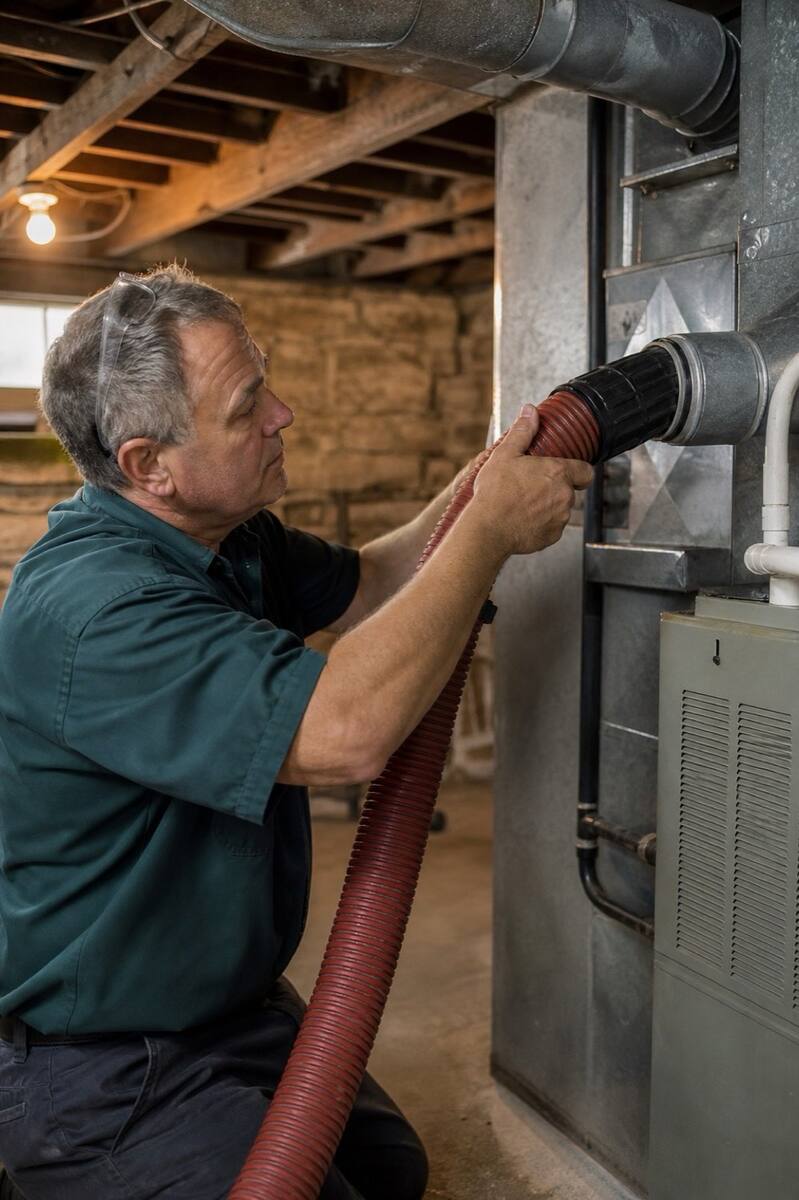
What does the EPA say about duct cleaning and heating bills?
The EPA says little evidence exists that cleaning only the ducts will improve the efficiency of the system. It also says some research suggests that cleaning dirty cooling coils, fans, and heat exchangers can improve efficiency. Those parts are the heating and cooling components, not the duct runs. The EPA adds that a poorly performed cleaning job could possibly increase your heating and air conditioning bills.
For the full picture of when cleaning makes sense, see Is air duct cleaning worth it? An honest answer.
What actually wastes heat in an older Rochester home?
The EPA says sealing duct air leaks can help save energy on heating and cooling bills, and that ducts in non-air-conditioned spaces such as attics and crawl spaces should be properly sealed and insulated. In older homes, long runs through basements and attics are where a joint can come apart or leak. A clogged filter and a register blocked by a couch or rug are simpler problems that are easy to rule out. The EPA says to change filters regularly and more often if they become clogged.
Older ductwork has its own questions. See Is it safe to clean the original ductwork in an older Rochester home? and Furnace filters and duct dust.
What can I check myself before paying anyone?
Three checks are free to do. First, look at the furnace filter and replace it if it is clogged, and make sure the filter is the right size, with no gaps for air to slip around it. Second, walk the house and make sure no furniture, rugs, or curtains cover a supply register or a return grille. Third, if part of your basement is unfinished, look at the visible duct runs for a section that has come apart, a loose joint, or a gap.
If you find a disconnected or leaking run, write down where it is. It is a repair question, and the next section covers who to call.
When should I call an HVAC contractor?
Call a qualified HVAC contractor if the house is cold, the furnace short-cycles or makes unusual noises, or you suspect a dirty blower, heat exchanger, or coil. Furnace repair, tune-ups, and duct repair or sealing are HVAC contractor work. This guide does not say Rochester Duct Cleaning does that work.
Duct cleaning is a separate job, and it can still make sense in some homes. See How often should air ducts be cleaned in Minnesota? or read about our air duct cleaning service.
Related questions
Will cleaning my ducts lower my heating bill?
The EPA says little evidence exists that cleaning only the ducts will improve the efficiency of the system.
Can sealing leaky ducts lower heating bills?
The EPA says sealing duct air leaks can help save energy on heating and cooling bills. It also says to make sure ducts are properly sealed and insulated in non-air-conditioned spaces such as attics and crawl spaces.
Does cleaning the furnace blower or coil help?
The EPA says some research suggests that cleaning dirty cooling coils, fans, and heat exchangers can improve the efficiency of the system. That is heating and cooling equipment service, and this guide does not say Rochester Duct Cleaning does it.
How often should I change my furnace filter?
The EPA says to change filters regularly, and to change them more frequently if they become clogged.
Can a poor duct cleaning raise my bills?
The EPA warns that a poorly performed cleaning job could possibly increase your heating and air conditioning bills.